
Murmuring Ghosts
The Haunted World of Juan Rulfo's Pedro Páramo

“All night I hear the voice of someone seeking me out. All night you abandon me slowly like the water that sobs slowly falling. All night I write luminous messages, messages of rain.” —Alejandra Pizarnik1
“The air alters the color of things, breezes refresh your soul as if life were a passing murmur, as if it were nothing more than a soft murmuring …” —Juan Rulfo2
The ancients held that the entrance to Hades was Lake Akerousia, located in northwestern Greece. Charon, Death’s ferryman, waited there for souls departing for the underworld.
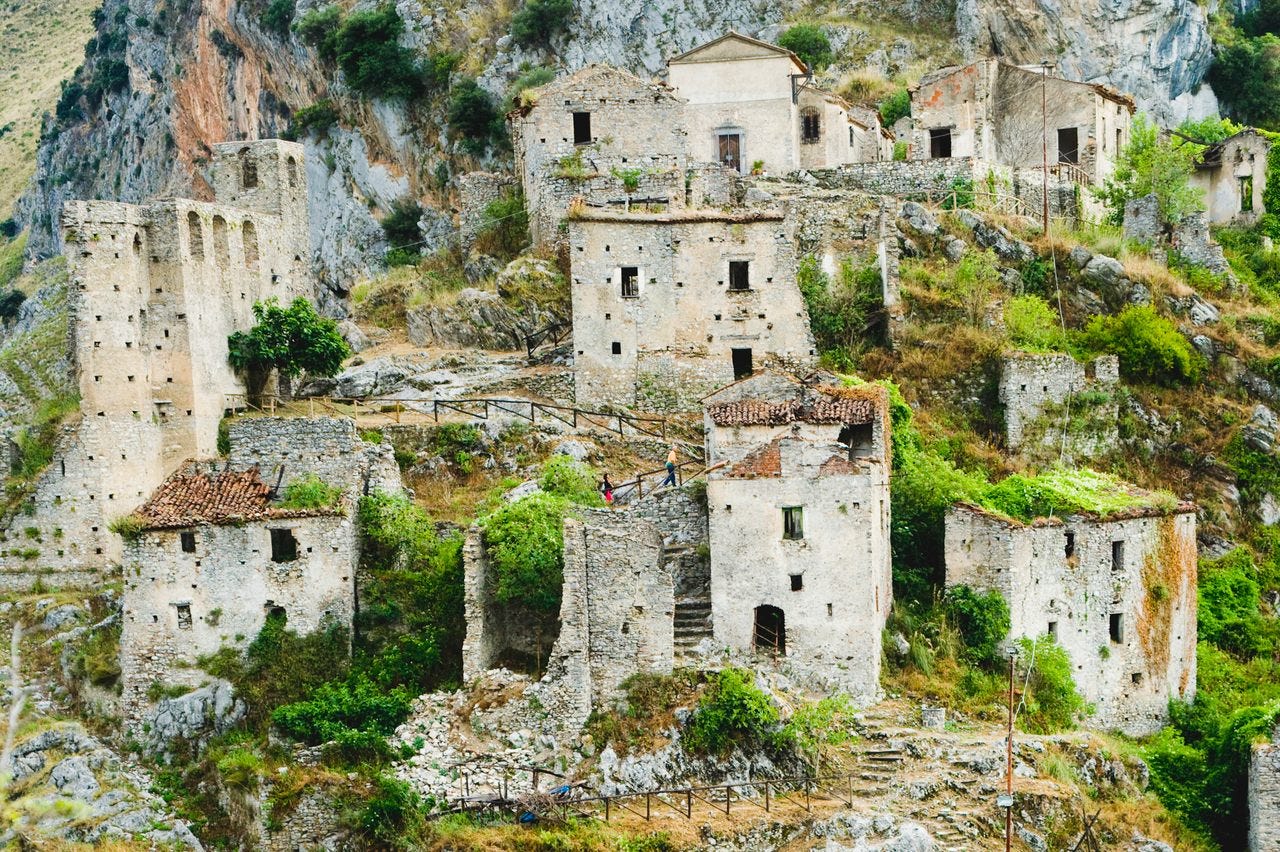
In Juan Rulfo’s 1955 novel Pedro Páramo, hell’s entrance shifts to the dead Mexican village of Comala, and Abundio Martínez, an arriero or muleteer, replaces Charon. Comala lies in a desolate, scorchingly hot valley. It “sits on the burning embers of the earth, at the very mouth of Hell,” Abundio tells Juan Preciado,3 a sojourner in search of his father. “They say many of those who die there and go to Hell come back to fetch their blankets.”4 Grim humor from Death’s arriero.
This is the concluding installment in the Juan Rulfo Series. Here are earlier ones:
Prologue: “The Extraordinary Fiction of Juan Rulfo”
Part 1: “Dealer Takes All—The Golden Cockerel”
Part 2: “The Place Where Sorrow Dwells—The Burning Plain”
The ancients also believed that the underworld’s inhabitants were shades, insubstantial, drifting, shadowy wisps that retain some degree of personal identity but lack the vitality and self-direction of living beings. As Homer tells us, even once strong-lunged warriors are capable of nothing more than “little squeaking cries” once they enter Hades.5
So it is with the inhabitants of Comala. They’re ghosts, echoes of memories, lingering after-images of people and events trapped in “a pure heat that had no air.” Nothing ever happens in this twilight space, yet “everything seemed to be waiting for something.”6 In this regard, Rulfo’s Comala is a sister town to Edgar Lee Masters’ similarly haunted Spoon River, except what goes on in it is more like a fever dream than a quietly slumbering cemetery.
Whose memories? Most obviously, the ones of Juan Preciado’s mother, whose dying words send him to Comala in search of Pedro Páramo, the father he’s never met. Comala, Juan tells us, is “the place of my mother’s memories, of her nostalgia, a nostalgia of tattered sighs.”7 The sighs he hears there—or, better, senses, because they “had no sound, they were silent. You could feel them, but they made no sound, like words you hear in a dream”8—belong to his mother.
And yet that’s not quite right. Comala is a liminal place where space and time fracture and personal identities weave in and out of one another. So sometimes Preciado hears—or feels—his mother’s memories directly from her ghostly lips. But at other times, her memories are filtered through the memories of people in Comala, likewise dead, she once knew: the hospitable Eduviges Dyada or mournful Dorotea, desperate for the son she never had, or the brother and sister who secretly lived as husband and wife. All these voices and more murmur to Preciado—“and that’s how a whole new world started swirling around in my head”9—gradually, nonlinearly, whispering to him in bits and pieces the story of his father.
It’s all disorienting for those of us who dwell outside of Comala. We’re used to a world where boundaries between the living and the dead are impenetrable. The din of our everyday lives drowns out the background murmuring that fills the air of Comala. Our thoughts stay inside our heads unless we release them through our mouths. The past remains safely where it should be: behind us. But Rulfo wants to tell us that what we call reality is largely an artifact of our own making. If the curtain ever slips and we find ourselves in our own Comalas, all our carefully delineated assumptions about time and place vanish. Like Juan Preciado, we enter into a realm of metaphysical fluidity, an ontological kaleidoscope.
Not hell, exactly. But hell-adjacent for those need their reality conventionally bordered.
Juan Preciado Goes Looking
The first part of Rulfo’s novel focuses (if that’s the appropriate word for a tale characterized by metaphysical porosity) on Preciado’s search for his father, Pedro Páramo, whom he soon discovers is long dead, just like everyone else in Comala. He learns this through the muleteer Abundio, who turns out to be Páramo’s son, too—one of several, as a matter of fact, because Páramo was a serial seducer of Comala’s maidens. But since the normal boundaries of space and time don’t apply, Preciado senses scenes from his father’s life—Páramo’s own memories that free-float in Comala’s air—stretching all the way back to his childhood. “This town is full of echoes,”10 Preciado realizes, and some of them are Pedro’s.
Memories are never simply snapshots or reels of the past. They fuse with our awareness of the present and our anticipation of the future. So, for example, at one point Preciado senses his father’s memory of a childhood episode: his grandmother sending little Pedro out to the local store to buy (on credit, because the family is brutally poor) a corn mill. But in the middle of attuning to this memory of the past, Preciado also feels Pedro’s present thought (which of course is also a memory, since Pedro is long dead: wheels within wheels within wheels), in which he pines for his childhood friend Susana, also dead, whom he loves (an anticipation of a memory of a future event: yet another wheel). To indicate the meta-quality of this present recollection, Rulfo uses French guillemets instead of Anglo punctuation.
«You’ve hidden yourself away, Susana, hundreds of meters high, way above the clouds, farther away than all other things. Hidden in the immensity of God, behind His Divine Providence, in a place where I can’t reach you, nor even see you, and where my words won’t find you.»11
A bit later, Preciado picks up from intuiting the memories of both Pedro and Eduviges Dyada that another Páramo son, Miguel, Pedro’s favorite and a scoundrel cut from the same cloth as his father, was killed in a riding accident. The local priest, Father Rentería12—another memory—refuses to give the young Páramo a Christian burial; Miguel once molested his niece, Anna. But Páramo senior browbeats and bribes him into finally performing the sacrament. The priest has the final word, though, praying when safely out of Pedro’s hearing, “Let’s give thanks to the Lord our God, for He has taken him from this earth where he caused so much harm, even if now He has received him in Heaven.”13
The novel’s second part is a more linear account (or at least as linear as anything can be in it) of Pedro’s love for Susana and his eventual decline and fall. The reason for the transition—and it’s sprung on the reader with no preparation whatsoever—is Preciado’s own death. Yes. The character who seems to be the closest thing to the novel’s narrator dies. But because he dies in Comala, his voice continues, murmuring alongside all the other voices. He even tells us, postmortem, how he died.
“There wasn’t any air, just a silent, listless night smoldering in the dog days of August.
There wasn’t any air. I had to gulp down the same air that was trying to leave my mouth, grabbing it with both hands before it could escape.
I could feel it flowing out and in, each time a bit thinner, until it became so fine that it seeped through my fingers and disappeared forever.
And I do mean forever.”14
After his death, Preciado lies in the same coffin as Dorotea, the Comala woman who always wanted a son, from which they observe and discuss events taking place above ground. Or, more accurately, since all of Comala is dead, they sense and discuss anc communicate with the whispered memories that linger in the ghost town. Interestingly, when a skeptical Dorotea challenges Preciado’s account of how he died, he acknowledges that “it was the murmuring that killed me.”15
Pedro Páramo Fails in Love
Juan Preciado comes to Comala to learn about his father, Pedro Páramo, only to discover that he’s long dead. But that’s not really a problem because he absorbs scenes from Pedro’s life through the ghostly memories that swirl in the dead village. Now that Juan too is dead, he intuits his father’s story through these memories even more clearly.
He follows Pedro through his ruthless absorption of all the land surrounding Comala into his huge La Media Luna ranchero. He hears the memories of the villagers whom Páramo mistreats, the priest he bullies, the unscrupulous hangers-on who do his bidding, the rather feckless revolutionaries he bribes and manipulates. We see his responses when his own father Luis is slaughtered at a wedding and his son Miguel is killed.
But the throughline of Pedro’s life is love for his childhood companion Susana San Juan, who eventually leaves Comala to marry a man named Florencio.
The loss of Susana hardens Pedro—as his son Abundio says, he becomes “bitterness incarnate”16—and when she returns to Comala on the death of Florencio, Pedro dragoons her into marrying him. But Susana loves only Florencio, and her yearning for him as well as her revulsion at Páramo eventually drives her mad. In one of the novel’s most powerful passages, we hear her wildly heartbroken and erotic lamentation.
“Lord, Thou dost not exist! I asked Thee to protect him. to look after him. That’s all I asked for. But all Thou carest for is the soul. And what I want from him is his body. Naked and warmed by love, simmering with desire, massaging the trembling of my arms and breats. My transparent body suspended by his. My slender frame supported by and lost in his strength. What am I do do with my lips now when I don’t have his mouth to occupy them? What am I to do with my aching lips?”17
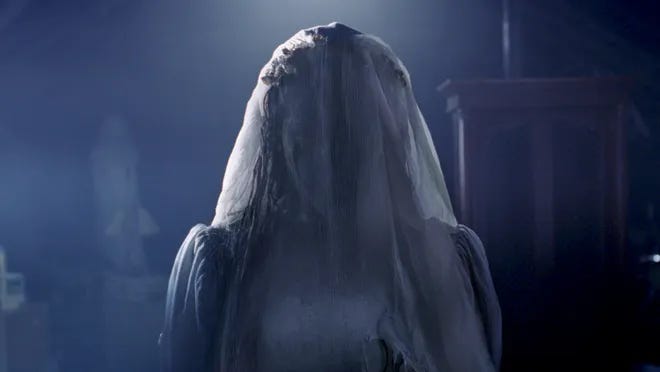
When Susana finally pines away and dies, Páramo is both gutted and infuriated that life goes on as usual in Comala when his own existence is now forever impoverished. “Don Pedro didn’t say a word. He didn’t leave his room. He vowed to take revenge on Comala: —I’ll cross my arms and Comala will die of hunger. And that’s what he did.”18 In his futy, Páramo denies access to land and water to Comala’s residents. Little by little, the town dies, leaving only ghostly echoes.
Comala’s decline is paralleled by Páramo’s. Losing Susana a second time withers him. Years after her death—or is it? again, time exercises little authority in Comala—he sits and remembers and mourns. “He had forgotten what sleep was, forgotten the very passage of time. ‘We old folks don’t sleep much, almost never. We doze off every now and then, but we never stop thinking. It’s the only thing we have left to do.’”19
Except, of course, die. And Páramo does, but not in the way that most old men do. His son Abundio, the muleteer, attacks him with a knife. Abundio doesn’t kill him outright, but wounds him so badly that he’s left an invalid, dying by inches, not unlike the way Comala disappeared. “A new part of his body die[d] with each passing day.”20 When death finally takes him, the once powerful landowner, strongman, seducer, and heartbroken lover, “hit the ground with a hollow thud, crumbling as if he were a pile of rocks.”21
Nothing Fades
After Páramo weds a reluctant Susana, he’s disturbed by her restless tossing each night on the bed they share. He knows she’s pining for Florencio. But surely she’ll eventually get over it. “Someday soon, he hoped. Nothing lasts forever. There’s not a single memory, no matter how intense, that won’t fade eventually.”22
But in Comala, no memory ever gets lost. The place swarms with them; they fill the air with their whispering, like poet Alejandra Pizarnik’s luminous messages of rain.
French philosopher and Nobel laureat Henri Bergson once speculated that telepathy, if it really exists, isn’t limited to especially “sensitive” individuals. “We produce electricity at every moment,” he argued. “The atmosphere is continually electrified, we move among magnetic currents.” So it’s not unreasonable to suppose that everyone’s thoughts, like electricity, might be force fields that endure independently of our actual thinking of them. “If telepathy be real, it is possible that it is operating at every moment and everywhere, but with too little intensity to be noticed, or else in such a way that a cerebral mechanism stops the effect, for our benefit.”23 That mechanism, thought Bergson, is consciousness, which serves as a necessary filter lest we be short-circuited by too much inflow. But simply because we don’t notice it doesn’t mean that we aren’t surrounded by “mind-energy,” nor that we can’t discipline our filters to be less restrictive.
Juan Rulfo’s Pedro Páramo seems to share that Bergsonian intuition. In Rulfo’s hands, Bergson’s mind-energy becomes memory-echoes that, contrary to Pedro’s hope when it comes to Susana, never really fade away. For Rulfo, we live in a memory-haunted world. Everything that once was still is because its echoes, its after-images, endure. Sometimes they interpenetrate and sometimes they careen off one another. But nothing fades.
Now, the thought of living in a world that constantly murmurs the past can be unsettling. But it can also evoke awe. To be surrounded by billions of whispered memories of both history’s saints and monsters, to realize that they’re our ghostly contemporaries, floating alongside us as we go through life and that our memories become theirs as well: this invites us to experience reality and consciousness in a new, richer way. Christians like to talk about the invisible assembly of saints. Rulfo—and perhaps Bergson—agree: the community in which we dwell is wider and deeper than we imagine. We’re surrounded by the memory voices of our ancestors. In Rulfo’s tale, they whisper to us at the gates of Hell. But perhaps those very same gates open to Heaven as well.
Alejandra Pizarnik, “All night I hear the noise of water sobbing” in The Galloping Hour: French Poems. Trans. Patricio Ferrari and Forrest Gander (New York: New Directions, 2018), p. 25.
Juan Rulfo, Pedro Páramo. Trans. Douglas J. Weatherford (New York: Grove Press, 2023), p. 57.
As in all of Rulfo’s fiction, names are important. Preciado means “cherished” or “precious.” Pedro is derived from the Greek word for “stone” and páramo is a “bleak plateau wasteland.”
Rulfo, Pedro Páramo, op. cit., pp. 3-4.
Homer, Iliad. Trans. Emily Wilson (New York: W.W. Norton, 2023), p. 549. [Book 23, line 136]
Rulfo, Pedro Páramo, op. cit., p. 3.
Ibid., p. 2.
Ibid., p. 46.
Ibid., p. 1.
Ibid., p. 39.
Ibid., p. 11.
Another Rulfo wordplay. A renteria is someone who lives on unearned income. Father Rentería, a spoiled priest, is a beneficiary of the corrupt Pedro.
Rulfo, Pedro Páramo, op. cit., p. 26.
Ibid., p. 56.
Ibid., p. 57.
Ibid., p. 4.
Ibid., p. 100.
Ibid., p. 116.
Ibid., p. 117.
Ibid., p. 122.
Ibid., p. 123.
Ibid., p. 94.
Henri Bergson, “Phantasms of the Living and Psychical Research” in Mind-Energy: Lectures and Essays. Trans. H. Wildon Carr (New York: Henry Holt, 1920), pp. 80, 79.